 Nomiplex
An agreement loses strength when, weeks later, everyone remembers something different. Documenting it creates a common foundation for the next conversation: what was requested, what was decided and what still needs review. The history supports work rather than a contest over whose memory wins.
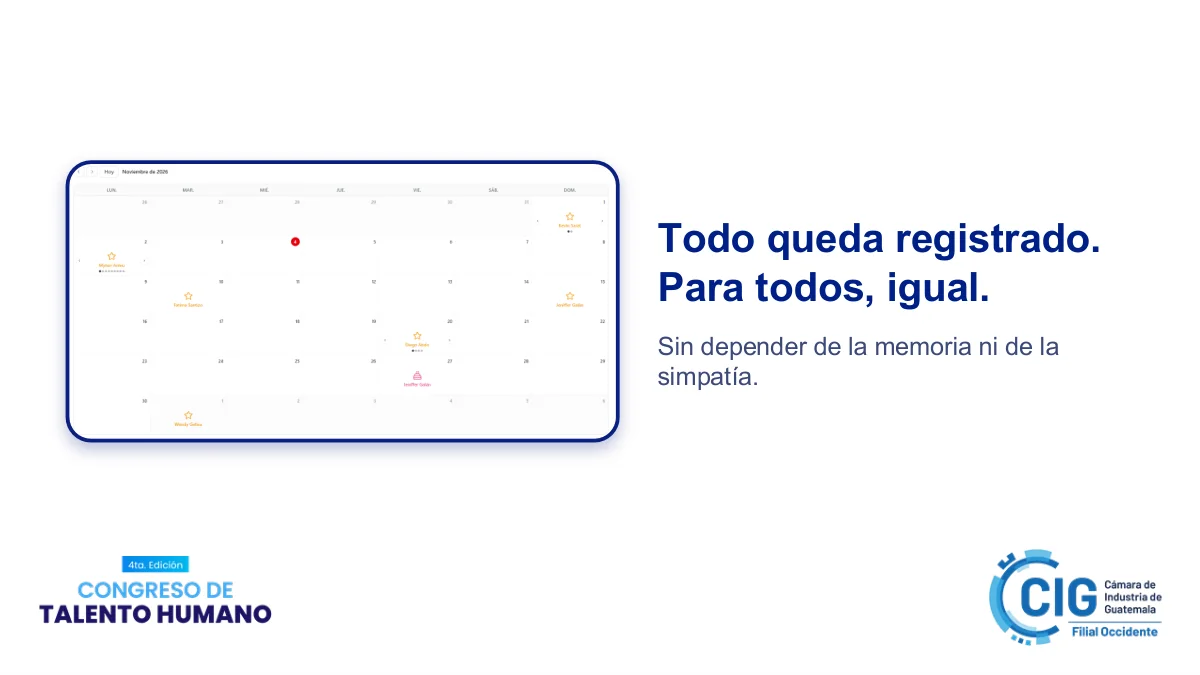
Nomiplex documents feedback, requests, bonuses, alerts and reminders. Training and the calendar provide a reference for viewing events in one place. The opportunity is straightforward: continuity should not depend on personal preference or who remembers best.
Record what makes the agreement understandable
After a conversation, record the commitment or request, date, decision and follow-up owner. If a criterion supported approving a bonus or changing a date, make it explicit. Distinguish confirmed agreements from matters awaiting confirmation.
For example, “We will review the draft on Tuesday against these two criteria” helps prepare the next meeting. “Needs a better attitude” explains neither the expected work nor the support offered.
Feedback remains a human conversation. Recording its conclusion helps people resume it; it does not replace listening, explaining or answering questions. Personal details that do not contribute to the employment decision do not need to be retained.
Consult the history before deciding
Before responding to a new request, review the earlier agreement and the criterion used in comparable situations. If a condition changes, explain why a different decision is appropriate and update the reference.
This practice reduces dependence on scattered messages and incomplete memories. It does not require treating different situations as identical: it makes the information considered visible.
Colquitt and colleagues’ meta-analysis distinguishes procedure, information, treatment and outcomes as dimensions of organizational justice. It does not show that documentation creates automatic impartiality; it reminds us that a decision also needs an explanation and an opportunity to respond.
Maintain continuity through the calendar and training
A useful history looks forward. Consult the calendar for events and training, and prepare follow-up conversations with earlier agreements at hand.
If a review calls for learning, confirm the relevant training and who will support its application to the role. When the date arrives, review both progress and the support promised.
Limit access according to responsibilities and provide a clear correction route. The quality of a history is not measured by accumulated notes, but by whether another person can understand the process and continue the support.
Put it into practice with Nomiplex
Choose an agreement or request currently scattered across emails and conversations. Review how to document it in Nomiplex with a date, owner, criterion and decision. For feedback, separate the personal exchange from the work-related summary worth retaining; for bonuses or requests, make the response’s basis understandable.
Before the next follow-up, consult the history and the events and training calendar. Check what remains current and resolve any differences with the person involved. Agree who maintains the information and who can consult it. The objective is a shared reference, not additional forms.
Request a Nomiplex demo to review that documentation and follow-up journey with your team.
Sources and further reading
- Colquitt et al. (2001). Justice at the millennium: A meta-analytic review of 25 years of organizational justice research. DOI.