 Nomiplex
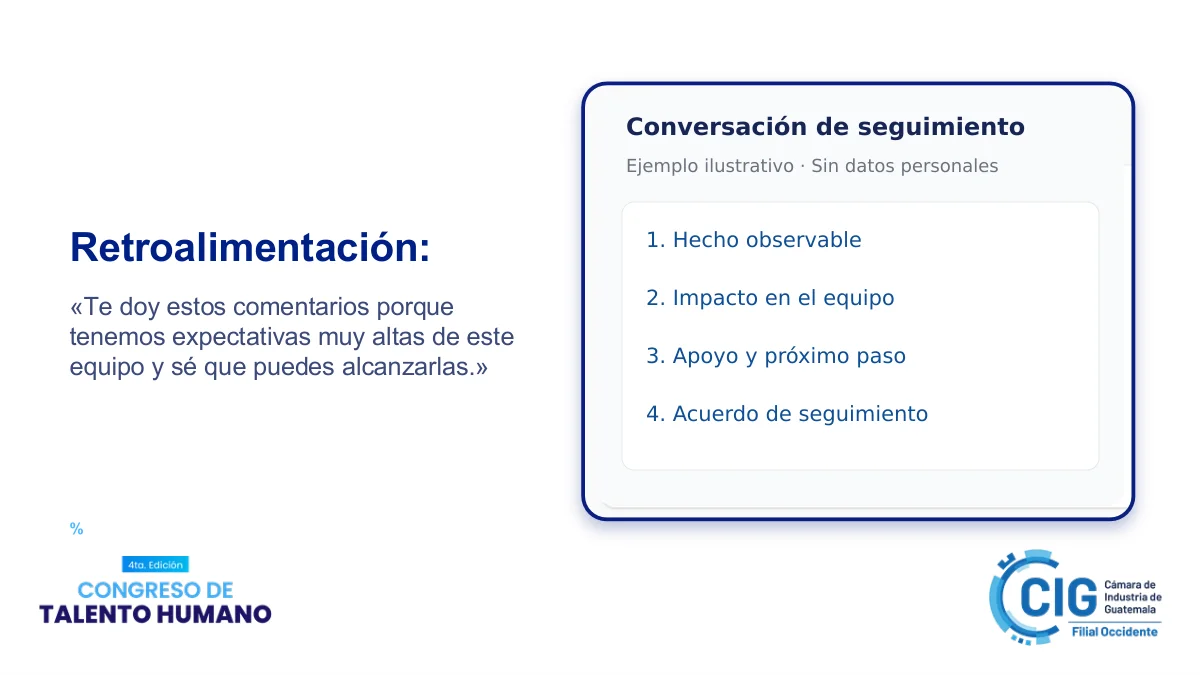
“I’m giving you these comments because we have very high expectations for this team, and I know you can meet them.” Try saying the phrase aloud or writing it down before your next feedback conversation. It brings together two messages worth communicating together: the standard matters, and the person has your confidence as they work toward it.
The phrase opens the conversation; it does not do all the work. It needs understandable evidence, an explicit expectation and a supported next step. Nomiplex helps document evaluations and follow-up; the leader provides the words and listening.
Explain the evidence and expectation
Start with an example from the work. “The proposal does not compare the two agreed alternatives” allows a document to be revised; “you lack commitment” attributes an intention while leaving the required change unclear.
Explain why the criterion matters: comparing alternatives helps the team decide with sufficient information. Then ask how the other person understands the situation. An instruction may have been ambiguous, or an input missing.
Consulting the documented evaluation in Nomiplex helps recover the agreement, but bring only one or two sufficient examples to the conversation. The purpose is not to accumulate grievances, but to locate the gap you will work on.
Express confidence with practical backing
Confidence does not require an opening compliment or a promise of success. It communicates that investing attention and resources in the person’s learning is worthwhile.
After the opening phrase, specify the support: reviewing an example together, providing information or reserving an intermediate review. Ask what they need to start and check what you can actually provide.
Yeager and colleagues studied feedback messages with adolescent students in educational contexts involving racial mistrust, not employee productivity. Their results establish neither a universal formula nor an improvement percentage applicable to every team.
Agree on an observable next step
Turn the conversation into an action: compare two alternatives in the next draft using the agreed criteria, then review it before delivery. Define who supplies information and when you will meet again.
If training is needed, connect that need with department-level learning in Nomiplex. At follow-up, review progress and whether the promised support arrived on time.
The system documents the process; you provide the words. Edmondson’s research relates psychological safety to learning without turning a phrase into a causal recipe. Connection also depends on leaders acknowledging unclear instructions and keeping their side of the agreement.
Put it into practice with Nomiplex
Choose an upcoming conversation and consult the evaluation criteria and results in Nomiplex. Prepare an example, practice the high-expectations-and-confidence phrase, and bring support you can genuinely provide. During the meeting, listen before agreeing the next step.
Afterward, document the work agreement and connect the learning need with department-level training where appropriate. Assign an owner and review date. At that later meeting, compare a new example with the original criterion and check the support delivered too. The record maintains continuity without replacing the manager’s involvement.
Request a Nomiplex demo to connect evaluation, training and human follow-up.