 Nomiplex
An evaluation should help someone understand their work and next development step. For that to happen, people in the same department need to know the criteria and receive the same information before starting. Assessment should not depend on personal closeness to their manager.
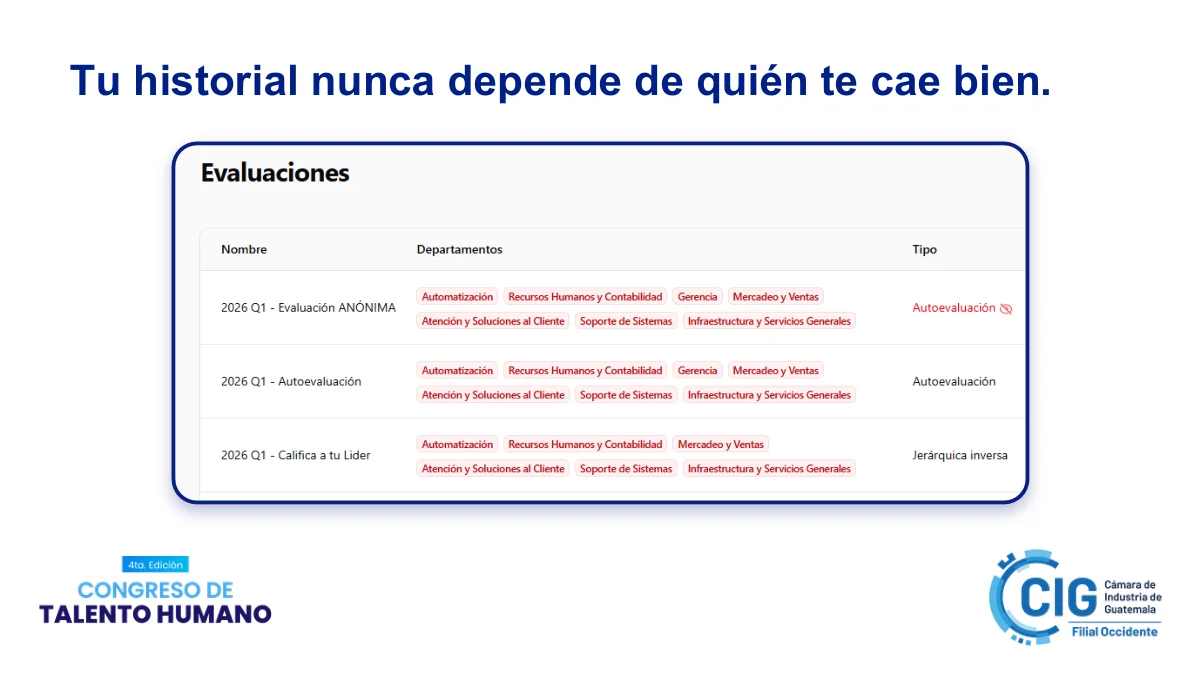
Assigning evaluations by department in Nomiplex helps organize a common process. Leaders can focus on explaining, listening and offering support instead of improvising a different rule for each person.
Start with the department and shared criteria
Choose one department and define the contributions you need to evaluate. Translate broad expectations into observable actions: sharing useful handover information, delivering agreed quality or addressing a dependency on time.
Communicate the criteria, period and purpose to everyone participating. Explain which information will be used and how people can comment on results. If the department contains different functions, clarify which expectation applies to each role.
Consistency does not mean comparing different jobs through an identical number. It means nobody has to guess what counts or discover a new requirement when receiving their result.
Include relevant perspectives
Nomiplex supports hierarchical, upward, anonymous and self-evaluations. Select the formats that contribute useful information to the cycle’s objective rather than choosing all of them out of habit.
Self-evaluation helps people prepare examples and questions. A hierarchical perspective sets role expectations; an upward evaluation can inform understanding of the manager’s support. Explain the scope of anonymous participation and confidentiality arrangements as well.
When consolidating results, distinguish observations from interpretations. If perspectives differ, use those differences to discuss concrete examples. More responses do not automatically eliminate bias: interpreting them still requires judgment.
Turn assessment into support
A leader becomes an ally by helping interpret the result and agreeing what happens next. Ask what evidence is missing, which obstacle appeared and what support would help in the next stage.
Close with a clear expectation, a relevant resource or training opportunity and a date for reviewing progress. Nomiplex can connect consolidated results with department-level training programs.
Colquitt and colleagues relate dimensions of organizational justice to workplace attitudes and behaviors across varied studies. Their review does not prove that a platform is an impartial judge. It does remind us that process, explanation and treatment matter alongside having a result.
Put it into practice with Nomiplex
Select one department for the next cycle and confirm participants, criteria and the information everyone will receive. Review which Nomiplex evaluation formats fit your objective and explain the process before assigning them. Reserve time for subsequent conversations too.
With consolidated results, prepare an example for each expectation and hear each person’s response. Choose one learning need and review the department-level training that could support it. Name an owner and follow-up date, later checking both progress and the support delivered. A common process works better when it leads to concrete help rather than ending at a score.
Request a Nomiplex demo to organize department evaluations and their connection with training.
Sources and further reading
- Colquitt et al. (2001). Justice at the millennium. DOI.