3 minutes
We all know environmental problems are directly affecting our quality of life worldwide.
Recently, the World Economic Forum suggested that "developing countries are the most vulnerable to climate change," so we face a problem that may be felt more strongly in Latin American countries.
This reflection leads us to ask: how can we counteract this phenomenon and help stop it?
There is an approach that will help us develop behavior consistent with our awareness of this problem: the rule of the 3 Rs:
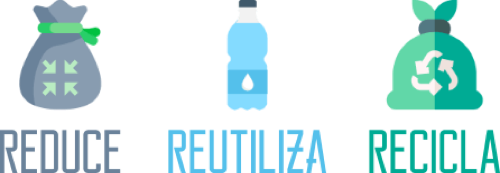
Reduce
This means consuming consciously and intelligently so we produce less waste.
When we speak of reducing, we mean trying to reduce or simplify consumption of direct products—everything bought and consumed—since this is directly related to waste and to our wallets. For example, instead of buying 6 small bottles of a drink, we can get one or two large bottles, obtaining the same product with fewer containers to worry about.
Another example could be to stop using plastic bags when shopping, consume fewer products with plastic packaging, and reduce paper consumption at home and in the office.
Reuse
Finding new uses for products you considered disposable is a habit that helps reduce the impact of our consumption.
The second most important R also indirectly reduces environmental impact. It is based on reusing an object to give it a second useful life.
All materials or goods can have more than one useful life, whether by repairing them for the same use or imaginatively finding a different use. For example, reuse plastic bottles by filling them with plastic bags to make ecobricks. Use plastic containers as plant pots or to organize your office or workshop.
Recycle
The final R, recycling, is based on treating waste to obtain new products, preserve potentially useful materials, and thereby avoid the environmental damage associated with disposal—gases and other toxic substances. Recycling has many facets, and its application ranges from simple household habits to complex international regulations.
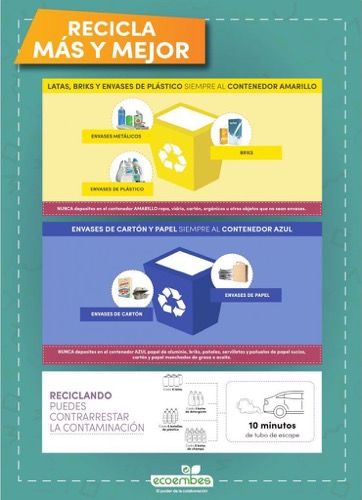
Individually, we can select and separate the waste we generate at home, using the familiar yellow, green, blue, and gray containers for metals and plastics, paper, cardboard and related materials, glass, packaging, and organic waste.
You can download this useful recycling guide to learn how to separate waste correctly:
Recycling is a very simple action we should turn into another daily household habit and involve our entire community in.
Practicing it daily is positive for human beings and the planet. What are you waiting for?
Get on board with recycling!