
4 minutes
Because of the current situation, many parents have had to redefine their activities, especially those normally in the office all day who now need to balance work and household tasks.
Many parents face the challenge of meeting professional responsibilities while helping their children at home. As mentioned in earlier blog posts, online classes have become a fundamental part of education in these times of crisis. That is why we want to share 5 tips with our community to help parents handle online classes.

- Teach your children that adaptability is the most important thing in life.
- Learn as much as possible about the software and digital platforms your children use.
- Help your children adjust to their changing educational role.
- Find educational, cultural, sports, or artistic activities to complement your children's learning.
- Find additional educational support for your children in areas they enjoy or find difficult
1 Teach your children that adaptability is the most important thing in life
One of humanity's most important abilities may be adapting quickly to new situations; it is part of our evolution as a species.
Education should therefore be no exception, especially in an era when everything, with or without a pandemic, changes abruptly and constantly seeks improvement and new solutions.
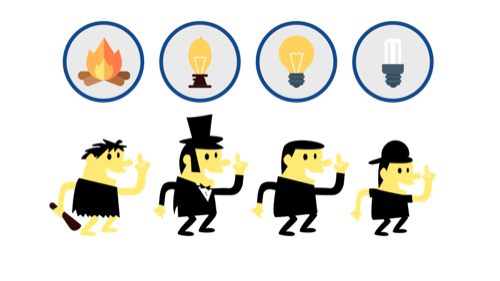
No one will say this is easy. Stability and certainty about the near future are certainly necessary in every educational process. But this new educational format is not merely remote; it is also a transitional state in which the entire education system will be permanently transformed.
2 Learn as much as possible about the software and digital platforms your children use
Beyond the current situation, parents should always stay informed about their children's environment and activities. For this generation, we must pay attention to a new environment: the virtual environment, which includes social networks, software, platforms, and applications.

It is important to have access to and oversight of every element of this environment, and education is no exception.
Many educational applications offer parent accounts in addition to student accounts, enabling direct communication and firsthand information.
The act of staying informed is essential for developing an informed view of online classes and being able to guide, help, or mediate as a parent.
3 Help your children adjust to their changing educational role
Learning in a virtual environment requires participants to change roles , and teachers and parents must guide students through this change.
Parents should encourage self-discipline, initiative, and above all emphasize that learning is a nobler goal than passing.
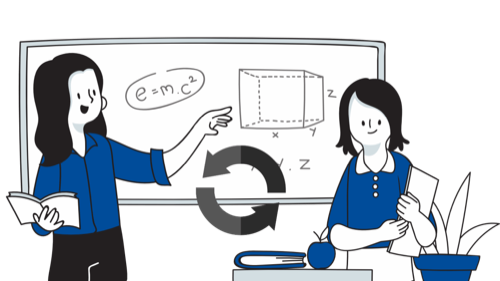
Online classes make this ethical reality of learning more apparent, since there are no mechanisms—and there should not be—to control the many ways of passing without having learned.
4 Find educational, cultural, sports, or artistic activities to complement your children's learning
In addition to formal schooling, it is important for young people to develop in other areas of knowledge: art, culture, sports, and hobbies, to name a few.

Traditionally neglected by the national education system and the local economy, these areas also develop competencies, just as traditional courses at an educational institution do.
Develop your children's understanding of how self-directed learning can be, so they can later use this skill in formal schooling.
Find additional educational support for your children in areas they enjoy or find difficult
A significant and common weakness in the national education system is the lack of courses reflecting students' personal interests. This is evident in the absence of a system of open or elective courses enabling formal development of skills such as painting, drawing, literature, and theater, to name a few.
Virtual environments can partly address this gap by making courses and tutorials available in countless areas of art, hobbies, and disciplines not normally included in school curricula.
There is undoubtedly an online academy or tutor that young people can make excellent use of to develop their interests.
Parents should encourage this, valuing the development of human expression, as well as supporting any formal education courses currently presenting difficulties or demanding additional interest from the student.
It is also necessary to seek support for future situations, such as when a student is about to enter university.
WITH THE COLLABORATION OF FORMATE