
5 minutes
Ensuring education continues in times of crisis is the responsibility of everyone in the educational community. Online classes have become very important today, but implementing them properly can be complex without specific ideas about how to proceed.
Those leading educational institutions must take the initiative and prepare a solid strategy to keep education moving forward.
That is why we have prepared a series of posts with strategies for handling the current situation as effectively as possible.
This time, we would like to share some strategies for school principals on handling online classes:

- Replan the school year based on current conditions.
- Pay more attention to internal customers.
- Seek specific or general, external and internal advice.
- Form or encourage working groups among teaching staff.
- Align ideas and establish specific criteria for every educational process.
Replan the school year based on current conditions
There are many rumors and incomplete reports about resuming face-to-face classes as soon as possible. This measure could be detrimental to students' health at every level. We must also consider that many parents and older students will not want to risk their health and lives. Even if in-person activities are permitted again, they may decide to remain sheltered. Against this backdrop, planning the rest of the school year around current conditions—in other words, through distance or remote learning—is essential. This planning must be adapted as closely as possible to the capabilities of everyone in the educational community. All institutional efforts should focus on strengthening staff and service capabilities to serve students better.

Pay more attention to internal customers

In business, there are two main types of customers: external and internal. In the broadest sense, customers are all those interested in obtaining our services, who see significant value in what we offer. What matters most for any business is maintaining a definite number of customers who value everything it can offer. We often forget that our employees, teachers, coordinators, maintenance workers, administrative staff, and others are customers too. Creating an internal environment of respect, support, and consistent decision-making is therefore vitally important. When everyone feels supported despite difficulties, empathy develops between employees and management, making progress much easier. The institution can then operate highly efficiently, facing any difficulty and adapting to any change.
Seek specific or general, external and internal advice
An institution's leadership consists of people selected for their decision-making ability and capacity to keep the organization operating. However, when a situation completely changes operating conditions, leaders may find their abilities diminished by an entirely different working landscape. It therefore becomes essential to seek advice from those better prepared to face the new conditions. We know technology is the main tool for addressing our current crisis, specifically technology applied to education. It is therefore imperative to seek general advice on creating a platform for communicating while physically apart, as well as advice specific to your educational community's needs and the courses or areas you decide to work on. Remember that advice need not only be external: we often already have highly qualified staff who can support everyone else.

Form or encourage working groups among teaching staff
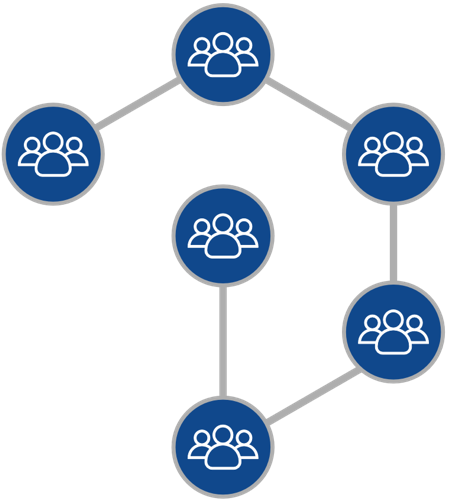
It must be clearly understood that each employee's operational role has changed completely, and our conception of every position needs adjusting. One of leadership's most important functions is allocating staff appropriately and forming working groups. This must be done almost from scratch, with continuous assessment of the new arrangement. Effective communication channels must also be created, responsibilities decentralized, and ongoing collaboration encouraged between teachers and subject-area coordinators. Adapting suddenly to new educational conditions and formats is a monumental task for everyone, so reducing the volume of work and making the most of available resources and personnel is essential. This improves not only teaching and learning quality and support for parents, but also creates an internal learning environment that allows our team's skills and abilities to grow.
Align ideas and establish specific criteria for every educational process
We have already mentioned the importance of decentralization through working groups that can divide and simplify tasks. However, an educational institution's leadership must decide and establish, as clearly as possible, the criteria that guide the work of each team and each member. This information must be consistent with actions, easy to understand, and communicated to employees repeatedly. The current crisis changes rapidly, so leadership decisions must also be prudent, ongoing, and explicit.

WITH THE COLLABORATION OF FORMATE