2 minutes
Multiple intelligences: bodily-kinesthetic intelligence. Multiple intelligences: bodily-kinesthetic intelligence.
Most people might think we are talking about physical ability, but there is much more: coordination, processing and expressing information, and controlling one's body and what it produces. In fact, what all these individuals display is nothing other than a form of intelligence that Gardner already recognized in his theory of multiple intelligences: bodily or kinesthetic intelligence.
Bodily intelligence: what is it?
Bodily intelligence is the set of cognitive abilities that allow the mind to coordinate with the rest of the body, enabling fluid, precise control. Thanks to it, we can manage our strength, balance, speed, coordination, and precision. It is a type of intelligence that allows skills to be learned and automated. Obviously, it is also linked to both fine and gross motor skills.
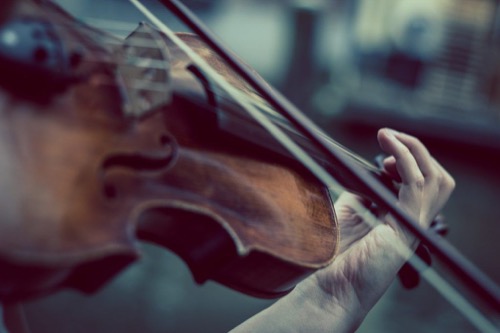
This type of intelligence has a wide variety of uses, enabling proper adaptation to the environment and the achievement of goals and objectives. We mainly use it when handling instruments and tools, whether simple, complex, or highly precise. Bodily intelligence also includes the ability to express emotions through body movement.
This last aspect has important implications in another sense, arising from the fact that the "soul" greatly influences the body and the body influences the "soul." In this way, knowing how to manage the body also implies improved management of the mind in self-awareness and self-regulation.
These considerations about bodily intelligence lead it to be viewed as especially developed in professions requiring great precision or physical ability, such as acting, dance, painting, crafts, or surgery.
An undervalued mental ability
Bodily intelligence is a highly valuable ability, fundamental to human development and even evolution. Handling instruments and tools was essential to our ability to hunt and survive in prehistory, and as we have evolved, it has become increasingly necessary for managing social interactions and technological progress.
However, despite its great importance, it is a very undervalued intelligence: one need only look at the little time and little consideration given to physical education in schooling, or the low social esteem given to most professions requiring it. Apart from highly successful professionals, most people entering fields like dance and acting are seen as belonging to a world apart and are even dismissed, while professionals such as craftspeople are rare today and receive little social recognition. The exception would be cases linked to medicine.
Perhaps a change in mindset is needed so we begin to appreciate that our bodies and how we use them are just as important as conventional knowledge, because ultimately, in daily life, we do not only know things: we also do things.