
3 minutes
Continuing with multiple intelligences, we will discuss visual-spatial intelligence, the ability that allows us to observe the world and objects from different perspectives.
Who possesses this type of intelligence?
Chess players and visual arts professionals—painters, designers, sculptors—excel in this intelligence, as do taxi drivers, who need an excellent mental map of the cities they travel through.


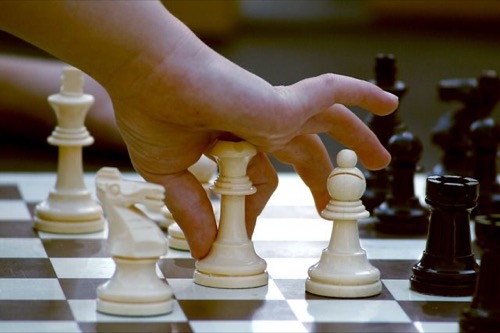
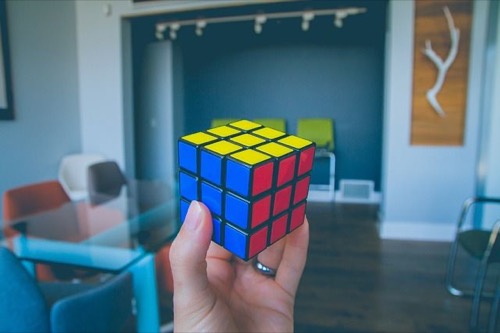
People who excel in this type of intelligence often have abilities that let them create mental images, draw, and detect details, along with a personal sense of aesthetics. This intelligence includes painters, photographers, designers, advertising professionals, architects, creatives…
Can visual-spatial intelligence be improved?
As often happens when discussing intelligence, many people tend to think these mental abilities are innate and determined by genetic inheritance.
As often happens when discussing intelligence, many people tend to think these mental abilities are innate and determined by genetic inheritance.
So... how can it be improved?
The specific exercises shown to be effective in improving spatial intelligence are not readily accessible from home and belong to training programs led by specialists. However, that does not prevent us from including tasks in daily life that emulate the logic used in these laboratory tests. To do this, we simply need to remember what spatial intelligence is and use our creativity.
For example, driving a car regularly—and safely—can help, since we must account for the position of every part of its surface.
Learning to plan the placement of shapes in drawings we create also presents the challenge of arranging objects that, although two-dimensional, occupy space. The same applies to somewhat more demanding and costly tasks, such as carving a figure from a block of wood. Any of these activities strengthens cognitive abilities related to spatial and visual intelligence.
Likewise, some games have mechanics directly related to testing spatial abilities and, by extension, spatial intelligence. Among traditional games, we could mention tangrams and Rubik's cubes, for example. Video games presenting a special challenge to spatial intelligence include Portal, Antichamber, and Q.U.B.E., although classic three-dimensional platform games such as Super Mario Galaxy can also work well, since every jump requires considering the camera position, the character's position, and the intended landing location. No one can say exercising intelligence is boring!