
3 minutes
Because of the current global situation, distance education has become indispensable in teachers' and students' lives.
Educational technologies make this possible, enabling knowledge to be exchanged even when teachers and students are not in the same physical environment.
Class content remains the same. The difference is that online classes let teachers use multiple interactive tools to create their teaching materials.
Teachers should no longer focus on long lectures, because they now have many ways to deliver content to students more effectively.
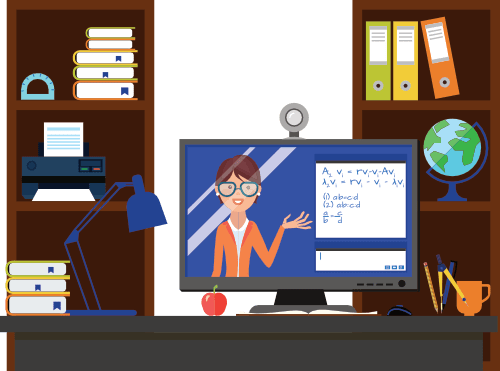
Teaching in the digital age
Teachers must innovate in their teaching techniques to maintain students' interest in learning.
How do you teach online?
Identify your students' profile
You need to understand your students' needs and wishes. But how can you find out? Research, talk to your students, and understand the problems they face in the course or courses you teach.
Questionnaires are extremely useful for gathering information from students. They help provide an overall yet personal idea of how students feel about your course.
Break topics into sections
Although it may not seem so, accessing online educational material can become overwhelming if its content is not optimized.
The internet is a very fast communication channel, so you need to create material that holds students' attention for as long as possible.
A good practice for online teachers is outlining content. Dividing it strategically will help maintain students' attention.
When dividing content, remember to create interesting sections that complement each other.
Another worthwhile practice that distinguishes teachers is always leaving space for students to submit their questions.
Select the class format:
Remember that interaction in an online class is very different from classroom interaction. Students are not physically present in real time. This challenges teachers, but also encourages new ways to interact because of the communication channel.
The important thing is that teachers can choose and try different teaching techniques. Here are some formats you can use to provide the best online classes:
Video lessons
These are excellent options for helping students feel more involved, because video is a very educational format and its content is easy to consume. Moreover, seeing the teacher can make the lesson very dynamic.
E-books
These are digital books that can be read on various devices (computers, tablets, phones), making your material easy to access.
Specialized educational guides: these are guidelines you can make available to users. This material lets you clearly demonstrate your authority and experience on particular topics.
White papers
These are short pieces of content focused on a single topic. They are excellent for presenting quantifiable information.
Blog
Blogs have quickly gained a prominent place in education, particularly because of their exceptional ability to publish content and integrate resources from many sources, such as:
- Audio and video
- Animations
- Documents
- Presentations
- Maps
- Surveys
- Timelines
- Concept maps
- Interactive exercises
A blog is one of the easiest online publishing resources for users with minimal internet browsing experience.
For language teachers, blogs are among the most productive tools available, probably offering the best relationship between time, effort, and results.
Which format should I choose?
You do not need to choose just one format for your online classes. Experiment, choose more than one option, and observe your students' preferences.
Always consider the format you handle best. Some people excel at making videos; others prefer writing their content. The truth is that no format is inherently better. Choose the one best suited to you, your students, and the content.