3 minutes
Organizing your classroom space is essential when putting different educational methods into practice.
The most common classroom arrangement has all students sitting separately at their desks, facing the board.
It is very important to keep reorganizing our classroom space so monotony does not take over.
Things to consider when organizing your classroom.
- Arrange your space according to learning needs: Desk placement should adapt to the activities taking place in the classroom.
- Create interactive spaces. Create spaces encouraging collaborative learning and student interaction. For example, you can create a reading corner where students can reflect, debate, and share a reading.
- Use the entire classroom as a teaching space. The classroom should facilitate presenting and displaying work and, most importantly, encourage students to share their ideas in different ways —visually, orally, in writing, and others. You can have different learning objects students can interact with independently. A good idea is to allow contact with nature by caring for plants.
- Create a comfortable, pleasant space belonging to everyone and for everyone. The classroom must be a welcoming, inclusive space where all students feel they are participants and creators. It should be a living space under construction, facilitating attention to diversity, stimulating creativity, and strengthening students' multiple intelligences and abilities.
FIVE WAYS TO ARRANGE CLASSROOM SPACE
There are many ways to organize classroom space—as many as teachers' creativity and students' needs allow.
We want to share these 5 ways to arrange the learning space and the situations in which you should choose them:
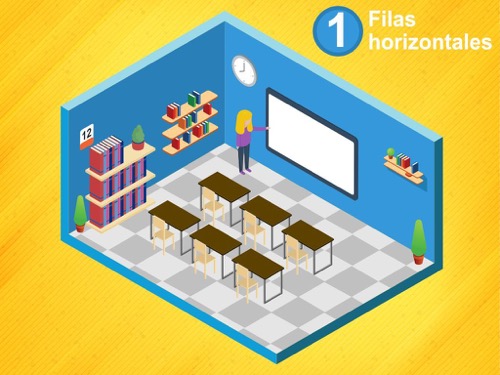
1. In horizontal rows.
This option is useful if teachers want to hold students' attention during an explanation or a question-and-answer session, for example. It stimulates students' concentration and leaves room for some interaction among classmates.
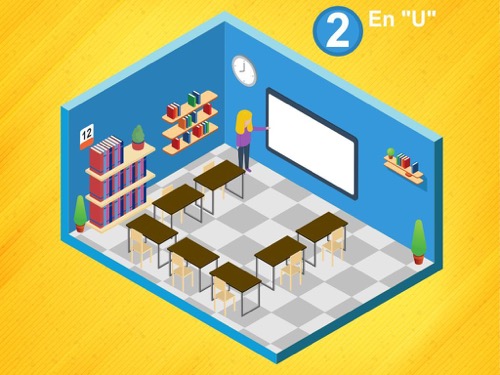
2. In a U shape.
This arrangement places all students in the front row, allowing them to see both the teacher and their classmates clearly. It is highly recommended for classroom debates.
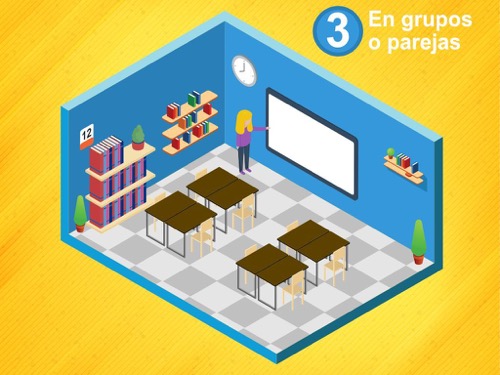
3. In groups of four or pairs.
This classroom arrangement is best suited to collaborative work, making it easier for students to communicate, exchange ideas, and share materials, encouraging student interaction.
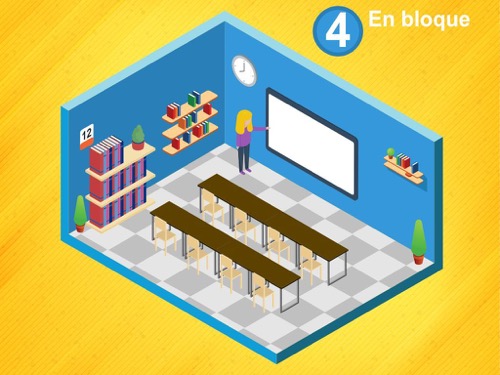
4. In a block.
This classroom arrangement, with students sitting very close together, is useful when teachers want them to pay attention to a projection, demonstration, or experiment. It is recommended for temporary use, since prolonged use can lead to discipline problems.
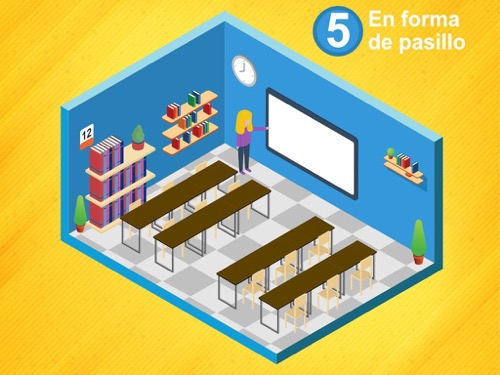
5. In an aisle arrangement.
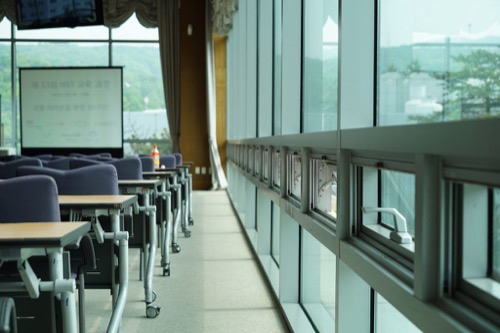
This arrangement places students in two rows of desks facing each other, with an aisle between them. Teachers can deliver explanations along the aisle, but also invite participation, moderate debates, or propose games between the two teams formed by the rows.